By Lauren Holland
Updated November 2026
Using an ab roller wheel correctly comes down to three things: a stable starting position, a controlled rollout, and a deliberate return that uses your abs instead of your lower back. In this guide you will learn how to set up, perform your first rep safely, progress over several weeks, and avoid the errors that cause most of the back discomfort people report with this tool.
What an Ab Roller Wheel Does for Your Core
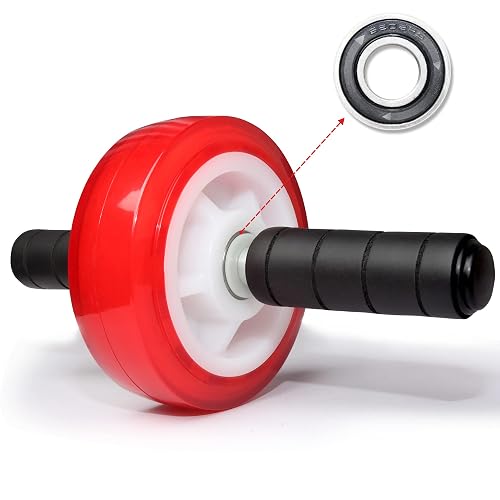
An ab roller wheel is a simple piece of equipment: a wheel, usually with a single or double axle, attached to one or two handles. You kneel, hold the handles, roll forward, and pull yourself back. Because your body is fully extended during the rollout, your rectus abdominis, obliques and deep stabilizers, including the transverse abdominis, have to resist gravity to keep your torso from collapsing toward the floor. That resistance is the training stimulus.
Shopping for one? See our guide: 7 Best Ab Wheel Rollers for Core Training: 7 Compared (2026).
The exercise is often described as an anti-extension movement. Rather than flexing your spine to curl up, you are trying to keep your spine in a neutral position while your arms move your center of mass away from your hips. Understanding this helps you judge whether a rep is working the right muscles: if your hips sag or your lower back arches sharply, the load has shifted away from your core.
Step 1: Choose the Right Setup
Before your first rep, prepare your space and your body. A few minutes of setup prevents most injuries.
- Pick a flat, non-slip surface. A carpeted area or a yoga mat works well. Hard, polished floors let the wheel slide unpredictably.
- Keep a clear path of at least 3 feet in front of you so you can roll out fully without hitting furniture.
- Check the wheel for cracks, loose axles and tight handle grips before each session.
- Use a thick pad under your knees if your floor is hard. Kneeling on bare tile is uncomfortable and can distract you from your form.
- Wear comfortable clothing that does not restrict hip or shoulder movement.
Step 2: Get Into the Starting Position
Start on your knees with the wheel directly under your shoulders. Your hands should grip the handles at about shoulder width, with your wrists straight. Tighten your abs and squeeze your glutes so your pelvis is slightly tucked. Your body should form a straight line from your knees to your head.
Hand and Knee Placement
Keep your knees about hip width apart. If they are too wide, the wheel may track sideways. If they are too close, your balance suffers. Many beginners place their hands too far forward, which pushes the wheel out before the core is ready. Keep your hands directly over the wheel’s center.
Breathing Before the Rep
Take a breath in through your nose, brace your midsection as if someone is about to press on your stomach, and exhale slowly as you begin. Bracing matters more than breathing depth; it stabilizes your spine during the movement.
Step 3: Perform the Rollout Correctly
The rollout is the part of the movement that most people rush. Move slowly, and let your range of motion be limited by control rather than by how far you can reach.
- Keep your core braced and your arms straight, but not locked at the elbows.
- Roll the wheel forward in a slow, steady motion, lowering your torso toward the floor. Your hips should move in the same plane as your shoulders.
- Stop when you feel your lower back begin to arch or when your hips start to drop. For most beginners, this happens well before full extension.
- Pause briefly at the end of the range of motion, holding the position for 1 to 2 seconds if you can maintain form.
- Return by pulling the wheel back toward your knees using your abdominal muscles, not by swinging your hips backward.
Controlling the Speed
Aim for a rollout that takes about 3 to 4 seconds and a return of about 2 seconds. Speed creates momentum, and momentum reduces the amount of work your core does. Slow tempo is the single most effective way to make the exercise harder without adding any equipment.
Keeping Your Spine Neutral
Think of your body as a plank that rolls forward. Your ribs should stay down, your lower back should not sag, and your neck should remain in line with your spine. If you feel pressure in your lower back, shorten the range of motion immediately rather than pushing through.
Step 4: Build a Beginner Progression Plan
Most people benefit from a gradual build-up over four to six weeks. The table below offers a simple framework. Adjust based on how your back and abs respond.
| Week | Focus | Suggested Sets and Reps | Range of Motion |
|---|---|---|---|
| 1 | Learn the bracing and return | 3 sets of 5 reps, 2 days per week | Short, 6 to 12 inches of rollout |
| 2 | Control the tempo | 3 sets of 6 to 8 reps, 3 days per week | Short to moderate |
| 3 | Increase range | 3 sets of 8 reps, 3 days per week | Moderate, 18 to 24 inches |
| 4 | Add a 1-second pause | 3 sets of 8 to 10 reps, 3 days per week | Moderate to full, if form holds |
| 5 to 6 | Advance or add variations | 3 sets of 10 to 12 reps | Full range with clean form |
Leave at least one rest day between sessions in the early weeks. Your abs recover quickly, but the stabilizing muscles in your back and shoulders often need more time to adapt.
Step 5: Use Variations to Progress
Once you can complete 10 controlled reps with a full range of motion, you can make the exercise more demanding. The usual options are a longer rollout, a pause at full extension, or a slower return. Advanced users sometimes move to a standing rollout, but that variation requires considerable strength and should be approached gradually. For a broader menu of options, see Exercises for Ab Roller Wheel: 8 Moves for Beginners to Advanced.
If you are still building the foundation, a plank can complement your rollout work. The guide Ab Roller Wheel for Beginners: A Step-by-Step Guide to Starting Safely covers a gentler starting sequence in more detail.
Common Mistakes When Using an Ab Roller Wheel
Most problems with this exercise come from a handful of predictable errors. Recognizing them early saves time and protects your back.
- Letting the hips sag. When the hips drop, the lower back takes the load. Reduce your range of motion until you can keep a straight line.
- Rolling out too far too soon. Full extension is not a goal in week one. Build control first.
- Swinging back on the return. Momentum from your hips or arms removes the work from your abs. Pull back slowly with your core.
- Holding your breath. Breathing out during the rollout and in during the return keeps your bracing consistent.
- Flaring the ribs. A rib-flared position arches the lower back. Keep your ribs down and your core tight.
- Doing too many sets. Form degrades quickly. Stop a set when your technique breaks down, even if you have not reached your target number.
If you consistently feel pain in your lower back, the article Why Does My Abdominal Wheel Ab Roller Hurt My Back? 6 Causes and Fixes walks through the most common causes and how to adjust your form. Persistent or sharp pain should be evaluated by a doctor or physical therapist before you continue.
Tips for Getting More From Each Session
- Warm up for three to five minutes with cat-cow stretches, bird dogs and a few slow planks.
- Film yourself from the side once a week to check your hip position and spinal alignment.
- Pair ab roller work with exercises for the hips and posterior chain, such as glute bridges, to balance your training.
- Focus on quality over quantity. Five clean reps teach more than fifteen sloppy ones.
- Track your reps and range of motion in a notebook or app so you can see progress across weeks.
Recommended gear
Most people need only the wheel itself, but a few accessories can make your training more comfortable and consistent.
- A dual-wheel ab roller. Two wheels tend to track more evenly than a single wheel, which helps beginners keep the movement in a straight line. View on Amazon
- A knee pad or thick exercise mat. Cushioning protects your knees during sessions on hard floors and makes it easier to focus on form. View on Amazon
- A small timer or metronome app. A tempo cue helps you hold a 3-second rollout and 2-second return consistently. View on Amazon
FAQ
How often should I use an ab roller wheel?
Most beginners do well with two to three sessions per week, with at least one rest day between them. As your form improves and recovery feels easy, you can increase frequency slightly.
Is an ab roller wheel good for beginners?
It can be, but only when you start with a short range of motion and focus on control. Beginners who try full extension in the first week are the most likely to strain their backs.
Why does my lower back hurt when I use an ab roller?
Lower back discomfort usually means your hips are sagging or your spine is arching during the rollout. Shorten your range of motion, brace your core more firmly, and slow your tempo. If pain persists, see a healthcare professional.
Should I kneel or stand when using the wheel?
Kneeling is the right starting point for almost everyone. Standing rollouts are an advanced variation that require substantial core and shoulder strength, so build up to them over months rather than weeks.
How many reps should I do?
A practical target is three sets of 8 to 12 controlled reps. If you can finish all sets with good form, extend the range of motion or slow the tempo before adding more reps.
Can an ab roller wheel replace crunches?
It can serve a similar purpose because both train the abdominal muscles, but they work the core differently. Many people use both, along with planks and other anti-extension and anti-rotation exercises, for balanced development.
Will an ab roller wheel give me visible abs by itself?
Core strength and visible abdominal definition depend heavily on overall body fat levels, which are shaped mostly by nutrition and total activity. The wheel strengthens the muscles underneath, but it cannot change body composition on its own.
Should I see a professional before starting?
If you have a history of back injury, hernia, shoulder problems or any condition that affects your spine or abdomen, speak with a doctor or physical therapist before beginning. They can recommend modifications that fit your situation.
Conclusion
Using an ab roller wheel well depends on a steady start, a controlled rollout, and a return driven by your abs. Begin with a short range of motion, slow your tempo, and progress only when your form stays clean. Over several weeks, that patience builds a core that handles load safely and performs better in everyday movement.
Related reading
- Vinsguir Ab Roller Wheel Review: Features and Performance
- Top 6 Plank Ab Roller Wheel Picks Worth Considering in 2026
- Perfect Fitness Ab Carver Pro Roller Wheel Review (2026)
Ready to choose one?
About Lauren Holland
Lauren Holland is part of our editorial team and reviews and edits our core & abs guides, checking product details against manufacturer specifications and owner feedback.