By Lauren Holland
Updated November 2026
A june fox ab roller wheel is a simple, portable piece of core equipment that lets you train your abs, obliques and lower back through rolling movements. This guide walks you through checking whether this type of wheel fits your goals, setting it up, performing the basic rollout with proper form, and progressing safely over time. By the end, you will know how to start with controlled reps, avoid the mistakes that cause back strain, and build a routine you can keep up.
What a June Fox Ab Roller Wheel Is Designed to Do
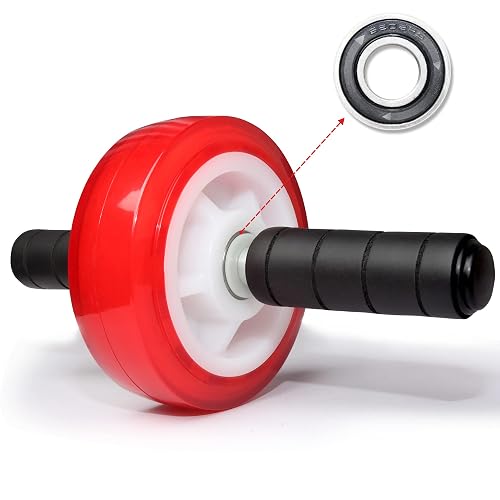
Most ab wheels share the same basic design: a central wheel, usually with a grip or handle on each side, that rolls on the floor while you hold the handles. The goal is to extend your body forward under control and then pull it back using your abdominal wall rather than your hip flexors or lower back. The wheel is an anti-extension trainer, meaning it challenges your trunk to resist the pull of gravity as your torso lengthens.
Shopping for one? See our guide: 6 Best Ab Wheel Rollers: Top Picks Compared for Home Core Training (2026).
When you search for a june fox ab roller wheel, you are usually looking for a compact, single-wheel or double-wheel trainer that you can use at home without a machine. Manufacturers typically describe these wheels as suitable for home workouts and for use on hard floors, often with foam padding on the grips or a knee pad included. Check the specific listing for wheel width, handle material and whether a knee pad is bundled, since these details vary between versions and the product line may change over time.
Before You Start: Checklist and Tools
You do not need much to begin. A few preparation steps will make your first sessions safer and more comfortable.
- A flat, non-slip surface. A carpeted floor or a yoga mat reduces slipping, though a mat can also make the wheel less stable, so test the feel first.
- A knee pad or folded towel to cushion your knees.
- Enough open floor space to extend your body fully, roughly the length of your body plus an arm span.
- A wall or sturdy surface nearby in case you need to brace or stop your roll.
- Your own baseline: if you have existing back pain, a recent injury, or a condition affecting your spine or abdominal wall, speak with a doctor or physical therapist before starting.
If you are still deciding whether to buy, it helps to compare designs first. The guide Ab Roller Wheel for Beginners: A Step-by-Step Guide to Starting Safely covers general considerations for new users, and Two Wheel Ab Roller: 6 Best Picks Compared for Core Training (2026) shows how dual-wheel designs differ from single-wheel models in stability.
Step-by-Step: Your First Rollout with a June Fox Ab Roller Wheel
Step 1: Set Your Starting Position
Kneel on your pad with your knees about hip-width apart. Hold the wheel with both hands, arms straight and shoulder-width apart, and place the wheel on the floor directly in front of your knees. Keep your hips stacked over your knees and your ribs gently pulled down toward your pelvis. Your glutes should be slightly engaged, not sticking out.
Step 2: Brace Before You Move
Take a breath into your belly and brace as if you expect a light push to your stomach. Hold this tension through the entire rep. A useful cue is to imagine zipping a tight corset around your midsection. Bracing first is what protects your lower back when you extend.
Step 3: Roll Forward With Control
Slowly roll the wheel forward, keeping your arms straight or close to straight. Let your torso lengthen until you feel a strong stretch in your abs and lats without your lower back sagging. For beginners, a comfortable range is often reached well before you are fully flat. Aim for a moderate count of about three seconds on the way out.
Step 4: Return to the Start
Pull the wheel back toward your knees using your abdominals, not by pushing with your hips or swinging your torso. Exhale as you return. A good rep should feel like your abs are doing the work and your hips move in one piece with your ribcage.
Step 5: Repeat and Rest
Begin with 5 to 8 controlled reps. Rest for 60 to 90 seconds, then repeat for two or three sets. Build up gradually as your control improves rather than chasing a higher count.
Form Cues and Range of Motion
Good form matters more than how far you roll. The table below summarizes the key checkpoints and what each one looks like.
| Checkpoint | What Good Form Looks Like | What to Avoid |
|---|---|---|
| Spine | Neutral, ribs down, straight line from head to knees | Arched lower back or sagging hips |
| Arms | Straight or slightly bent, shoulders stacked over hands | Shoulders collapsing forward or locking out painfully |
| Range | Stop where your core can still control the return | Rolling past control so the lower back drops |
| Breathing | Exhale on the way back, brace throughout | Holding your breath or breathing shallowly |
| Tempo | Slow extension, steady return | Bouncing off the floor or fast, uncontrolled rolls |
Common Mistakes to Avoid
- Rolling too far too soon. Going to full extension before you have the strength to return is the most frequent error. Shorten the range until you can reverse cleanly.
- Letting the lower back sag. If your hips drop toward the floor, you have passed your current limit. Roll back and rebuild control.
- Using momentum. Bouncing or yanking the wheel back uses your hip flexors and momentum instead of your abs.
- Holding the breath. Breath holding can raise pressure and weaken your bracing rhythm. Keep breathing steadily.
- Arching the lower back on the return. Pulling back by arching the spine rather than curling the pelvis turns the exercise into a lower-back movement.
- Skipping warm-up. Five minutes of gentle core work, hip mobility and cat-cow stretches helps prepare the spine.
If you experience sharp pain, numbness or pain that persists after training, stop and consult a healthcare professional. The article Why Does My Abdominal Wheel Ab Roller Hurt My Back? 6 Causes and Fixes covers common reasons for discomfort and how to adjust your setup.
Progressions and Variations
Beginner Progression: Partial Rollouts
Start by rolling out only a short distance, perhaps a few inches, and returning. This builds the bracing pattern without overloading your spine. Add distance gradually over several weeks.
Intermediate: Full Kneeling Rollouts
Once you can complete 8 to 10 controlled reps with a flat, neutral spine, extend further while maintaining the same tension. Full extension is not the goal in itself. The goal is steady control at whatever range you reach.
Advanced: Standing Rollouts
Standing rollouts are a much harder variation and should only be attempted after you have demonstrated strong control kneeling. Place your feet slightly wider than hip-width and use a wall nearby as a safety stop. Standing rollouts are not appropriate for everyone and should be approached cautiously.
For a broader set of movements, the article Exercises for Ab Roller Wheel: 8 Moves for Beginners to Advanced lists additional options, and Ab Roller Ab Wheel Guide: Form, Progressions and Common Mistakes explains how to advance without sacrificing technique.
Building a Simple Weekly Routine
Two to three sessions per week is a sensible starting point for most people, with at least one rest day between sessions. A short routine might look like this:
- Warm up for five minutes with gentle movement and breathing drills.
- Perform 2 to 3 sets of 5 to 8 controlled rollouts at your current range.
- Add a plank or dead bug set of 20 to 30 seconds to balance the workout.
- Cool down with a gentle child’s pose or lower back stretch.
Track your range and form rather than only reps. When your form stays clean for a full set at a given distance, you can consider extending slightly.
Tips for Getting More From Your Wheel
- Film a set from the side to check whether your lower back is staying neutral.
- Use a towel under your knees for comfort on hard floors.
- Keep your wheel clean and inspect the axle and handles periodically for looseness.
- Pair rollouts with other anti-extension and anti-rotation exercises rather than relying on one movement.
- Be consistent. Short, controlled sessions beat occasional heavy efforts.
Recommended gear
These items can make your practice more comfortable and safer. Choose based on your floor type and your knee sensitivity.
- Thick knee pad or kneeling pad: A padded cushion reduces pressure on the kneecaps and helps you stay in position longer. View on Amazon
- Non-slip exercise mat: A textured mat keeps your knees and hands from sliding, especially on hard floors. View on Amazon
- Dual-wheel ab roller: Some people find a two-wheel design more stable for beginners, since it reduces side-to-side wobble. View on Amazon
FAQ
Is a june fox ab roller wheel good for beginners?
It can be, as long as you start with short partial rollouts and focus on bracing. Beginners do best when they build control before adding range.
How often should I use an ab wheel?
Most people train two to three times a week with rest days between sessions. Recovery matters, especially if your back or abs feel sore.
Should my lower back hurt during rollouts?
No. Mild muscle fatigue in the abs is normal. Sharp or lingering lower back pain is a signal to reduce range, check your form, or stop and consult a professional.
Do I need a knee pad?
A knee pad is strongly recommended for kneeling variations, especially on hard floors. It improves comfort and helps you stay in position.
How long until I see results?
Core strength and control often improve within a few weeks of consistent practice. Visible changes in the midsection depend on overall body composition, nutrition and other factors, so an ab wheel is best viewed as one part of a broader plan.
Can I use this wheel if I have a back injury?
Do not start without medical clearance. A doctor or physical therapist can tell you whether rollouts are appropriate and which variations are safe.
What is the difference between a single and double wheel?
Single-wheel designs demand more balance and tend to challenge stability more. Double-wheel designs are often easier to keep straight. Choose based on your current control.
Conclusion
A june fox ab roller wheel can be a practical tool for core training when you approach it with patience and clean technique. Start with short, controlled rollouts, brace before every rep, and add range only when your form holds. Consistency over several weeks will do far more than rushing toward full extension.
Ready to choose one?
About Lauren Holland
Lauren Holland is part of our editorial team and reviews and edits our core & abs guides, checking product details against manufacturer specifications and owner feedback.