By Lauren Holland
Updated November 2026
An ab roller wheel is one of the most effective pieces of simple equipment for building core strength, and it works just as well for women as it does for anyone else. This guide explains how to choose an ab roller wheel that fits your body and experience level, how to set up and start safely, and how to progress from basic kneeling rolls to full-body extensions over several weeks. If you are new to the tool, start with the basics below and build up gradually.
Why an Ab Roller Wheel Works for Women
The ab roller wheel trains the rectus abdominis, obliques, transverse abdominis and the muscles of the lower back and shoulders all at once. Because the load changes as you roll farther out, you control the difficulty directly with your range of motion. Women who want a compact, low-impact option for home training often like the fact that the entire setup fits in a small corner and needs no assembly. For a broader look at what the tool builds, see Ab Wheel Roller Benefits: 7 Ways It Builds a Stronger Core.
Shopping for one? See our guide: 6 Best Ab Wheel Rollers: Top Picks Compared for Home Core Training (2026).
Strength is the main goal, not just muscle definition. Core stability supports your posture, your lifts in the gym and your everyday movement, so treat the wheel as a strength tool first and an aesthetic tool second.
Choosing the Right Ab Roller Wheel
Most wheels are built for a similar general purpose, but a few features matter more for smaller frames and beginners. Pay attention to the following factors before you buy.
- Wheel width. Wider wheels are more stable and easier to balance on. Many women find a wider wheel less intimidating during the first few weeks.
- Handle grip. Look for handles that fit your hand without forcing your wrists into a sharp bend. Foam or rubber grips reduce slipping.
- Wheel tread and rolling smoothness. A wheel that rolls freely reduces jerky movement, which is easier on the lower back.
- Knee pad or mat. A thick pad under the knees protects your joints during kneeling work.
- Elbow support. If you are a beginner or have sensitive wrists, a model with an elbow bracket or a double-wheel design can make the early stages more comfortable. For a closer look at these options, see Ab Roller Wheel with Elbow Support: How to Choose and Use One Safely.
Single Wheel vs. Double Wheel
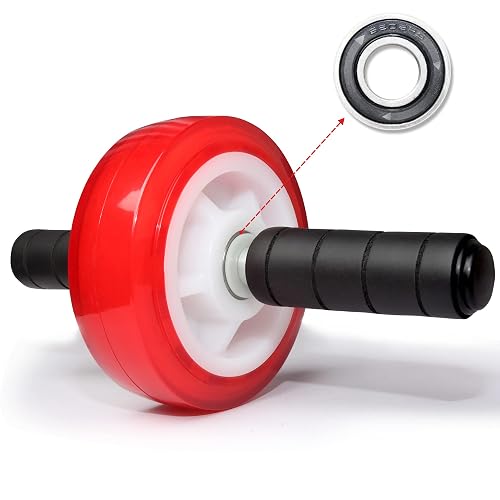
A single wheel is the classic design and gives the most control once you have built up strength. A double wheel adds stability by spreading your body weight across two contact points, which many beginners find easier. There is no single right answer. If you are unsure, start with a double wheel for the first two to three weeks, then move to a single wheel when kneeling rolls feel steady.
Setting Up Your Space and Body Position
Before your first session, prepare the space and your posture so you can focus on the movement itself.
- A clear floor area about 3 feet long and 2 feet wide
- A mat or folded towel under your knees
- Shoes off, or socks with good grip on a hard floor
- A wall or sturdy object nearby if you want a backup for balance
Kneel on the mat with your knees about hip-width apart. Hold the wheel with both hands directly under your shoulders. Keep a neutral spine, with your ribs stacked over your hips and your tailbone gently tucked. Squeeze your glutes lightly so your pelvis does not sag.
Step-by-Step: Your First Ab Roller Session
Step 1: Learn the Basic Kneeling Roll-Out
- Start in the kneeling position described above, with the wheel directly under your shoulders.
- Brace your abs as if you were about to be tapped in the stomach.
- Slowly roll the wheel forward, extending your arms, while your hips stay in line with your torso.
- Go only as far as you can keep your lower back flat. For most beginners, this is a short distance.
- Pull the wheel back toward your knees using your abs, not by pushing with your hips.
Aim for 5 to 8 controlled repetitions for the first few sessions, resting 60 to 90 seconds between sets.
Step 2: Use Partial Range of Motion
Do not chase full extension on day one. Roll out only to the point where your torso stays parallel to the floor or slightly higher than parallel. Each week, add a small amount of distance as your control improves. This principle, often called progressive range, is the safest way to build the movement.
Step 3: Add Repetitions and Sets
Once you can complete 8 clean repetitions with good form, work toward 2 to 3 sets of 8 to 12. Keep the tempo slow, around two to three seconds out and two seconds back. Speed adds momentum and makes it harder to keep your core braced.
Step 4: Progress to Standing or Full Extension
Standing roll-outs are the advanced stage. Only attempt them when you can perform kneeling roll-outs with full control and no lower back arching. Begin by rolling out a few inches from a standing position, using a wall for support if needed. The full progression is covered in Using an Ab Roller Wheel: A Step-by-Step Guide for Beginners.
Recommended Exercises and Variations
Once the basic roll-out feels comfortable, you can add variety to target the core from different angles. Good options include the wall-assisted roll-out, the plank position roll-out (hands on the wheel, toes on the floor), and rolling with a slight side angle for oblique work. For a complete list with form cues for each move, see Exercises for Ab Roller Wheel: 8 Moves for Beginners to Advanced.
Sample Beginner Weekly Plan
| Day | Session | Sets x Reps |
|---|---|---|
| Monday | Kneeling roll-out, short range | 2 x 6 |
| Wednesday | Kneeling roll-out, short range | 3 x 6 |
| Friday | Kneeling roll-out, slightly longer range | 3 x 8 |
Rest at least one day between sessions while your abs adapt. After four weeks, you can increase reps or range as your form allows.
Common Mistakes to Avoid
- Sagging lower back. This is the most frequent error and the most important one to fix. Stop the roll-out when your back starts to arch.
- Rolling too far too soon. Long extensions before you have the strength for them put strain on the lower back and shoulders.
- Using hip momentum. Pushing from the hips instead of pulling with the abs reduces the training effect.
- Holding your breath. Exhale as you roll out and inhale as you return, keeping your core braced throughout.
- Skipping warm-up. A few minutes of cat-cow stretches and gentle hip movement prepare the spine and shoulders.
If you experience back pain during or after training, stop and review the causes in Why Does My Abdominal Wheel Ab Roller Hurt My Back? 6 Causes and Fixes.
Tips for Women Starting Out
- Train two to three times per week with at least one rest day between sessions.
- Film a set from the side once a week to check your back position.
- Combine the wheel with other core work, such as planks and dead bugs, for balanced development.
- Pair ab work with overall strength training, since a strong core still depends on the rest of your body.
- If you have a history of back injury, pelvic floor concerns or are pregnant, consult a physical therapist or doctor before starting.
Recommended Gear
Several accessories can make your early sessions more comfortable and safer.
- A thick exercise mat. Kneeling on a firm, padded mat protects your knees during every rep. View on Amazon
- A double-wheel ab roller. The extra stability helps beginners learn the movement before moving to a single wheel. View on Amazon
- Knee pads. Useful if you train on hard floors or have sensitive knees. View on Amazon
FAQ
Is an ab roller wheel good for women?
Yes. It is an effective strength tool for the core, and women can use it to build abdominal and lower-back strength in the same way men do. Start with the kneeling version and progress gradually.
How long does it take to get good at the ab roller?
Most beginners can complete controlled kneeling roll-outs within two to four weeks of consistent practice. Standing roll-outs usually take several months to master.
How many reps should a woman do on an ab wheel?
A reasonable starting target is 2 to 3 sets of 6 to 10 controlled reps. Increase reps or range only when your form stays clean.
Can the ab roller wheel cause back pain?
It can, usually when the lower back arches or the roll-out is too long for your current strength. Keep the range short, brace your core and stop if pain persists. Consult a healthcare professional if pain continues.
Should I use a single or double wheel?
Beginners often do better with a double wheel for stability. Move to a single wheel once you can control kneeling roll-outs without wobbling.
How often should I train with an ab roller wheel?
Two to three sessions per week is a sensible frequency, with at least one rest day between workouts.
Do I need a special mat?
A padded mat is strongly recommended for kneeling work. A folded towel can work in a pinch, but it provides less protection for the knees.
Conclusion
An ab roller wheel can build real core strength for women when it is used with good form and a gradual progression. Start with short kneeling roll-outs, focus on keeping your lower back flat, and add range and reps only as your control improves. Consistency over several weeks will do more than any single hard session. If you have pain, an injury history or medical concerns, speak with a qualified professional before you begin.
Ready to choose one?
About Lauren Holland
Lauren Holland is part of our editorial team and reviews and edits our core & abs guides, checking product details against manufacturer specifications and owner feedback.