 By Lauren Holland
Updated November 2026
The ab roller wheel board is a simple piece of home training equipment, but the models on the market differ more than their photos suggest. The IRISFLY New 4-Wheel Abdominal Roller is marketed as an upgraded, high-performance version with automatic rebound and a four-wheel layout meant to spread load and stabilize the movement. This review looks at what the listing describes, what manufacturers and owners tend to emphasize, and where the product may fall short. Because this is a research-based review, not a hands-on test, the analysis relies on the listing details and common feedback patterns for this product type. This model suits people who want a compact, floor-based core trainer for home use and are comfortable with a bodyweight rolling movement. It is less suited to complete beginners with lower back pain, people who need a precise single-plane trainer, or anyone expecting a substitute for a structured full-body program.
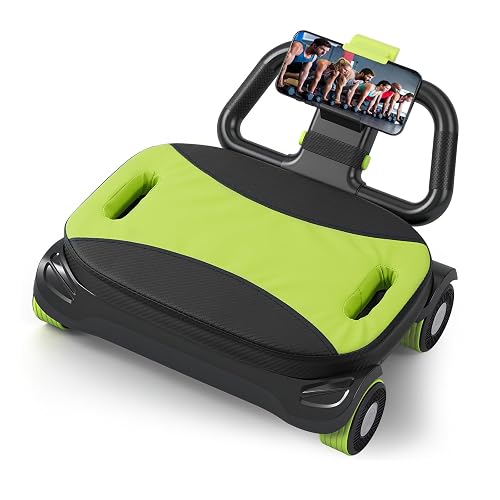
IRISFLY New 4-Wheel Abdominal Roller,Upgraded High-Performance Ab Roller Wheel,Automatic Rebound Ab Roller Board, Strengthen Core & Abs, Ab Machine Perfect for Home Workout
Product Overview
The IRISFLY 4-Wheel Abdominal Roller is a core trainer built around a flat board with a set of wheels on the underside. The listing names it as a “4-Wheel” design, an “Automatic Rebound” roller, and an “Ab Machine” for home workouts. In practical terms, you place your hands or knees on a central pad and roll the board forward across the floor, then use your abdominal wall and hip flexors to pull it back toward you. The rebound feature is intended to assist the return phase so you are not relying entirely on muscle strength to reel the board back in.
The product is aimed at people training at home without a gym membership. Its footprint is small enough to store under a bed or in a closet, and it requires no assembly beyond what the packaging describes. Like most ab rollers, its main job is to challenge the anterior core (rectus abdominis, obliques, and deep stabilizers) through anti-extension movement, where the spine resists being pulled into an arched position.
Manufacturers in this category typically position their products as a step up from basic single-wheel rollers because of added stability, a wider contact surface, and a board format that many users find easier to control. The IRISFLY listing follows that pattern. Whether that translates to a better training experience depends on your current strength, your training goals, and how the board handles on your floor surface.
Key Features & Specifications
The table below lists only the details that the product name and listing structure make clear. Exact dimensions, weight capacity, and wheel material should be confirmed on the Amazon product page before purchase, because specifications for this category vary between sellers and batches.
| Feature | What It Means |
|---|---|
| Design | Four-wheel board layout for a wider, more stable base than single-wheel rollers |
| Rebound | Automatic rebound to assist the return phase of the movement |
| Format | Board-style ab roller with a central grip or pad area |
| Intended use | Home core and abdominal training |
| Target muscles | Rectus abdominis, obliques, hip flexors, and deep core stabilizers |
| Setup | Ready to use after unboxing; no tools required per typical listing format |
Confirm dimensions, maximum user weight, and floor-surface recommendations in the listing before buying. Ab rollers are generally used on a mat or carpet, and wheel behavior on hard floors can differ.
Pros & Cons
Pros
- Four-wheel layout typically offers more lateral stability than single-wheel designs, which can help beginners keep the board tracking straight.
- Automatic rebound reduces the effort needed to pull the board back, which may make the return phase easier to control.
- Board-style format gives a larger contact area for hands or knees compared with a narrow wheel.
- Compact footprint for home storage and small training spaces.
- Simple use with no assembly steps described in the listing.
Cons
- Rebound mechanisms can feel abrupt to some users, especially on the return, and may need adjustment in how you control the roll.
- Four-wheel boards can be heavier and bulkier than single-wheel rollers, which may matter if you travel with your equipment.
- Stability on carpet versus hard floors can vary; some users report the board needs a mat for consistent movement.
- Bodyweight-only resistance means progression depends on technique, range of motion, and rep counts rather than added load.
- Owners often report that the board does not replace a broader program covering the posterior chain and rotational strength.
Performance Analysis
Performance in this category is best judged by how well the board supports correct technique. The core demand of any ab roller comes from resisting lumbar extension while the arms and torso move forward. A wider base and a more predictable rebound can help you keep the trunk braced, but they cannot do the work of bracing for you. Owners of similar multi-wheel boards commonly describe a learning curve: the first few sessions are spent finding a range where the lower back stays neutral, and only then does the board start to feel like a useful core tool.
The automatic rebound feature is the main differentiator this model emphasizes. Rebound is meant to reduce the strain of pulling back, which is one of the most common points where people lose form. When the rebound is smooth, it can let you focus on controlled eccentric work, the lowering phase that often produces the most muscle challenge. When it is too aggressive, it can encourage bouncing and momentum, which shifts load away from the abs and toward the hips and lower back. Feedback patterns for rebound-style rollers suggest that users who start with short ranges and gradually extend them tend to report the best experience.
Four wheels distribute load across a larger area, which many people find more forgiving than a single narrow wheel. Stability matters most for beginners, because a board that wobbles or drifts pulls attention away from breathing and bracing. Still, a wider base is not automatically better for advanced training. Advanced users who want maximum difficulty often prefer a narrower, single-plane roller because it demands greater control and deeper core activation at full extension.
For progression, you can increase difficulty by extending your range, slowing the lowering phase, pausing at the furthest point, or moving from knees to a more demanding stance as your control improves. The board itself does not add resistance, so these technique-based changes are where most of the training effect comes from. Expect the greatest benefit when the roller is part of a balanced routine that includes anti-rotation work, planks, and posterior chain exercises.
Who Should Buy This Product?
This board suits people who want a compact, home-based core trainer and who are comfortable learning a bodyweight movement. Beginners who find single-wheel rollers too tippy may appreciate the added base. People who already have a basic level of core strength and want a smoother rebound to focus on controlled lowering may also find it useful.
You should probably skip this product if you have current lower back pain, a history of disc problems, or recent abdominal surgery, and you should check with a physician or physical therapist first. Ab roller exercises place real load on the spine, and a board that makes movement easier can still encourage excessive range if you are not paying attention to form. Skip it too if you want an adjustable-resistance machine, a full cable workout, or a tool that trains the core through rotation and lateral flexion primarily. Those needs are better served by other equipment.
Buying Guide
When comparing ab roller wheel boards, focus on five practical factors: wheel count and base width, rebound behavior, the grip or pad design, the surface you plan to use it on, and how much you expect to progress. Wheel count is the first decision. Single-wheel rollers allow the most precise control and are compact, but they require more balance. Two-wheel and four-wheel boards trade some difficulty for stability, which is often the right trade for beginners. Check the listed dimensions against your storage space and your floor area, since a board that needs a wide clear space to roll may not fit a small apartment.
Rebound is the second factor. An automatic rebound can help the return phase, but it should not feel violent. If you are new to ab rollers, look for a model where you can control the speed in both directions. Read owner feedback for comments about how aggressive the snap-back feels, because this varies between designs and is one of the most commonly discussed issues in this category.
Grip and padding affect comfort. A board with a foam or cushioned central area can reduce pressure on the knees and wrists during kneeling work. Consider whether you will use the roller from knees or from a standing position, because that determines how much contact surface you need. Floor type matters too: carpet and mats generally give steadier movement than polished hard floors, where wheels can slide.
Finally, think about progression. If your goal is to train hard for several years, choose a model that supports more advanced variations or that you can outgrow with technique alone. If you want a simple, low-commitment tool for a few sessions a week, a stable board with easy rebound may be enough.
For comparison, the two alternatives below cover different parts of the market. The first is a six-wheel board that emphasizes multi-direction training and a soft foam pad, which may appeal to people who want to use the same equipment for arms and legs as well as the core.

6-Wheel Ab Roller Board, Multi-Direction Core Trainer with Soft Foam Pad, Ab Workout Equipment for Home Gym, Core Slider for Abs, Arms, Legs and Full Body Training
The second is a women’s-focused multifunctional board with a mat and 360-degree rotating design, which may suit people who want a portable setup and an included mat for home floors.

Ab Roller Wheel, Women's Multifunctional Abdominal Wheel Board with Mat,360° Rotating,for Home Gym, Full Body Fat Burning & Abdominal Training – Portable Fitness for Women (Black)
Each of these alternatives serves a slightly different purpose. The IRISFLY model sits in the middle: more stable than a single wheel, with a rebound feature, but without the multi-direction or accessory emphasis of the other two. Choose based on which training style you plan to use most.
For background on technique and common issues, you may find these related guides helpful: Using an Ab Roller Wheel: A Step-by-Step Guide for Beginners, Why Does My Abdominal Wheel Ab Roller Hurt My Back? 6 Causes and Fixes, and Why Does My Ab Roller Wheel Automatic Rebound Snap Back Too Hard?.
FAQ
Is an ab roller wheel board good for beginners?
It can be, especially models with a wider base. Beginners usually find multi-wheel boards easier to balance than single-wheel rollers. Start with short ranges, keep your back flat, and stop if you feel pain in your lower back. If you have any existing back or spine condition, check with a healthcare professional before starting.
Does the automatic rebound make the exercise easier?
It mainly assists the return phase, so the pull back requires less effort. That can make the workout more manageable, but it does not reduce the demand on your core during the lowering phase, which is where much of the work happens. Some users find the rebound too abrupt, so controlling the speed is important.
What muscles does an ab roller wheel board work?
The main target is the rectus abdominis, with support from the obliques, hip flexors, and deep stabilizers such as the transverse abdominis. Your lats and shoulders also work to control the arm position. The exercise is primarily an anti-extension movement, meaning the core resists the spine arching.
Can I use this board on carpet or hard floors?
Most owners of boards like this find carpet or a training mat gives more consistent movement. Hard floors can cause the wheels to slide, which affects control. Check the listing for any surface recommendations, and consider a mat if you plan to train on a smooth floor.
How often should I use an ab roller?
Many people train their core two to four times per week, but the right frequency depends on your recovery, your other training, and your form. Give yourself rest days, and reduce volume if your lower back feels sore the next day. Quality of movement matters more than the number of reps.
Is this a replacement for a full workout?
No. An ab roller trains the anterior core well, but it does not cover the posterior chain, hip strength, or rotational power in a balanced way. Pair it with squats, hinges, rows, and carries for a more complete routine.
What should I look for in the product listing before buying?
Confirm the dimensions, maximum user weight, wheel and board materials, and any care instructions. Read recent owner reviews for comments about rebound strength, stability on your floor type, and noise. Check the return policy in case the board does not suit your space or technique.
Final Verdict
The IRISFLY 4-Wheel Abdominal Roller is a reasonable choice for people who want a stable, compact, bodyweight core trainer with an automatic rebound feature. Its four-wheel base makes it more forgiving than single-wheel designs, and the board format suits home use. The main trade-offs are rebound behavior that may need getting used to, a bulkier footprint than some rollers, and the fact that it is a technique-driven tool rather than a source of added resistance. It is best for beginners and intermediate users with no current back problems who will pair it with a broader strength routine. Confirm specifications on the product page, read recent owner feedback, and consult a professional if you have any spine or abdominal condition.
Related reading
- What Does the Ab Roller Wheel Work? Muscles and Form Tips
- What Are the Benefits of the Ab Wheel Roller? 6 Key Advantages
- Vinsguir Ab Roller Wheel Review: Features and Performance
- Valeo Ab Roller Wheel: Setup, Form and Buying Tips for Beginners
About Lauren Holland
Lauren Holland is part of our editorial team and reviews and edits our core & abs guides, checking product details against manufacturer specifications and owner feedback.