 By Lauren Holland
Updated November 2026
Core strength exercises for diastasis recti are easiest to choose when you know what each resource is built for. This list compares seven guides and programs on the most practical criteria: how clearly the exercises are explained, whether they start gently, how well they cover breathing and pelvic floor work, and who the product is written for. Each pick is a product listing, not a substitute for individual advice.
Our top picks at a glance
- 1
 TOP CHOICEBest overallDiastasis Recti Exercise for EveryoneView on Amazon
- 2
 TOP CHOICEBest for men over 50Diastasis Recti Exercises for Men Over 50View on Amazon
- 3
 TOP CHOICEBest for a full recovery planThe Complete Diastasis Recti Recovery GuideView on Amazon
- 4
 Best for short sessions6-Minute Diastasis Recti ExercisesView on Amazon
- 5
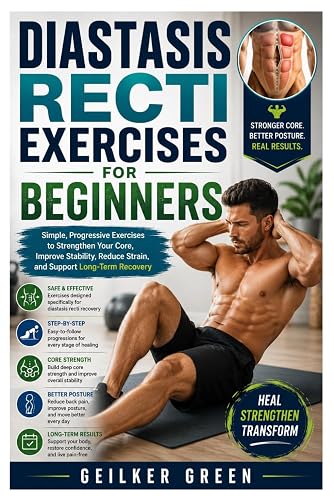 Best for beginnersDiastasis Recti Exercises for BeginnersView on Amazon
- 6
 Best for a Pilates approachDiastasis Recti PilatesView on Amazon
- 7
 Best for postpartum recoveryDiastasis Recti Secrets for New Mom: Proven Methods and Postpartum ExeView on Amazon
Our Top Picks
Quick Comparison
| Product | Best for | Key feature |
|---|---|---|
| Diastasis Recti Exercise for Everyone | Overall recovery | Covers posture and pelvic floor |
| Diastasis Recti Exercises for Men Over 50 | Men over 50 | Gentle core control moves |
| The Complete Diastasis Recti Recovery Guide | Full program | Step-by-step plan with nutrition |
| 6-Minute Diastasis Recti Exercises | Short sessions | Routine under six minutes |
| Diastasis Recti Exercises for Beginners | Starting out | Progressive difficulty levels |
| Diastasis Recti Pilates | Pilates fans | Postnatal Pilates sequences |
| Diastasis Recti Secrets for New Mom | Postpartum recovery | Focus on new-mother healing |
Diastasis Recti Exercise for Everyone
Diastasis Recti Exercise for Everyone: A Complete Guide to Healing Core Separation, Restoring Abdominal Strength, Improving Posture, Supporting Pelvic Floor Health, Reducing Back Pain, and Rebuilding
Best for: Overall recovery and rebuilding abdominal strength
This guide suits readers who want a broad explanation of core separation along with exercises for posture and back discomfort. Its scope is wide, so it works well as a foundation.
Pros
- Covers pelvic floor health alongside core work
- Addresses posture and back pain, not just the abdominal gap
Cons
- Broad scope means less depth on any single movement
Diastasis Recti Exercises for Men Over 50
Diastasis Recti Exercises for Men Over 50: Gentle Home Exercises for Core Control and Everyday Strength
Best for: Men over 50 building core control
Written for an audience that is often overlooked in recovery content, this option focuses on gentle moves and everyday strength rather than postpartum-specific advice.
Pros
- Audience-specific framing and language
- Gentle starting movements for everyday strength
Cons
- Not aimed at postpartum readers
The Complete Diastasis Recti Recovery Guide
The Complete Diastasis Recti Recovery Guide: A Step-by-Step Program with Safe Core Exercises, Breathing Techniques, Nutrition Strategies, Pelvic Floor … Restore Strength, Stability, and Confidence
Best for: A full, structured recovery program
This is the most comprehensive option, combining exercises with breathing technique and nutrition strategy. It suits readers who want a complete plan to follow week by week.
Pros
- Step-by-step program structure
- Includes breathing and nutrition guidance
Cons
- Longer read than a simple routine guide
6-Minute Diastasis Recti Exercises
6-Minute Diastasis Recti Exercises: Safe and Effective Diastasis Recti Exercise to Heal Abdominal Separation, Eliminate Belly Bulge, and Close Postpartum Gap
Best for: Short daily sessions
The format is built around a brief routine, which suits readers with limited time who want to build a consistent habit without a long session.
Pros
- Routine fits into a short daily window
- Easy to repeat consistently
Cons
- Limited depth for progression planning
Diastasis Recti Exercises for Beginners
Diastasis Recti Exercises for Beginners: Simple, Progressive Exercises to Strengthen Your Core, Improve Stability, Reduce Strain, and Support Long-Term Recovery
Best for: Readers starting from zero
Exercises are arranged in progressive steps, so readers can move from simple positions to more demanding ones at their own pace.
Pros
- Clear progression from simple to harder moves
- Emphasis on reducing strain
Cons
- Less guidance for readers already training regularly
Diastasis Recti Pilates
Diastasis Recti Pilates: Best Postnatal Pilates To Heal Ab Separation and Build Core Strength (Diastasis Recti Safe Exercises)
Best for: Readers who prefer a Pilates-based approach
This option frames core work through postnatal Pilates, which suits readers already familiar with that style of controlled movement.
Pros
- Pilates-based control and alignment cues
- Focused on postnatal safety
Cons
- Less useful if you are new to Pilates terminology
Buying Guide
Match the Program to Your Situation
Think about who you are and why you are doing core work. A guide written for postpartum recovery may not suit a man over 50 dealing with a bulge after a workout injury, and a beginner program will feel slow to someone who already trains regularly. Choosing a resource written for your life stage makes it easier to stay consistent.
Check How Gently the Program Starts
Diastasis recti responds best to progressions that begin with low-load, controlled movements. Look for a resource that explains how to test for abdominal separation, avoids crunches and heavy twisting at the start, and shows clear ways to modify each exercise. A program that rushes into advanced moves may do more harm than good.
Look for Breathing and Pelvic Floor Coverage
Effective core recovery depends on coordinating breath, deep abdominal muscles, and the pelvic floor, not just on repeating exercises. Guides that teach diaphragmatic breathing and explain how to engage the pelvic floor tend to give you a stronger foundation. If a resource skips these topics entirely, plan to supplement it with other guidance.
Consider Format and Time Commitment
Some people prefer a step-by-step plan they can follow over several weeks, while others want short, focused sessions they can fit into a busy day. Decide how much time you realistically have and whether you learn best from written instructions or from a structured routine. The format you can actually stick with will usually matter more than any single feature.
Confirm It Fits Your Goals and Limits
Some resources focus on posture or back pain, while others emphasize closing a gap or building overall strength. Read the description closely to see whether the stated goal matches yours. If you have a medical condition, recent surgery, or symptoms that worry you, talk with a healthcare provider or pelvic floor physical therapist before starting any program.
FAQ
Can core strength exercises fully close a diastasis recti gap?
Many people see meaningful improvement in the gap and in core function with consistent, appropriate exercise, but results vary widely based on the individual and how long the separation has been present. Some cases may not fully close without professional guidance or in rare situations, medical treatment. A healthcare provider or pelvic floor therapist can help set realistic expectations for your body.
How do I know if I have diastasis recti?
A common way to check is to lie on your back with knees bent, lift your head slightly, and feel along the midline of your abdomen for a gap between the two sides of the muscle. The distance and depth matter, so a professional assessment is more reliable than self-checking alone. If you notice a bulge or doming along the midline during effort, mention it to your provider.
Which exercises should I avoid with diastasis recti?
Many guides recommend limiting full crunches, sit-ups, heavy lifting with breath holding, and intense twisting until your core shows better control. Movements that cause coning or doming along the midline are usually a sign to scale back. Choose modified versions and progress slowly rather than pushing through discomfort.
How long does it take to see results?
Changes in core control and comfort often appear over several weeks of consistent practice, while changes in the gap itself may take months. Progress depends on your starting point, your consistency, and factors like recovery time and overall health. Tracking how you feel during daily activities can be just as useful as measuring the gap.
Do I need equipment to follow these programs?
Most diastasis recti routines rely on body weight, a mat, and sometimes a pillow or towel for support. Some programs, such as Pilates-based options, may suggest additional equipment, but it is usually optional. Check the product description if you want to know exactly what to prepare before starting.
When should I see a healthcare professional?
Seek advice if you have pain that is sharp or getting worse, leaking urine, pelvic heaviness, a visible bulge that does not change, or any symptoms after surgery or childbirth that concern you. A physical therapist who specializes in pelvic health can assess your specific needs. Professional guidance helps ensure your program is safe and suited to your body.
Conclusion
If you want a broad, gentle starting point, a general diastasis recti guide or the beginner-focused program is a practical choice, especially if you are new to core rehab. Readers who are postpartum may find the new mom and postnatal Pilates options more relevant to their stage of recovery.
Men over 50 and anyone wanting a structured, multi-week plan with breathing and nutrition context should look at the men-focused and complete recovery guides. Those with limited time may prefer the shorter 6-minute routine, while readers who enjoy a movement-based approach can explore the Pilates program.
Related reading
- Safe Core Exercises for Diastasis Recti: 6 Moves to Start With
- Deep Core Exercises for Diastasis Recti: 6 Safe Moves to Start With
- Core Strengthening Exercises for Diastasis Recti: 6 Safe Moves to Start
- Core Exercises With Diastasis Recti: 6 Safe Moves to Start With
- What Are the Best Exercises for Improving Core Strength? 8 Moves That Work
About Lauren Holland
Lauren Holland is part of our editorial team and reviews and edits our core & abs guides, checking product details against manufacturer specifications and owner feedback.


