 By Owen Palmer
Updated November 2026
If your ab roller hurts lower back muscles every time you use it, the problem is usually the movement, the setup or the equipment, not the idea of training your core. This guide is for people who want relief from that strain and still want a practical way to work the abs and lower back. The three picks below were selected on specifications, brand reputation and patterns in owner feedback, with a focus on whether each item supports spinal decompression, controlled stretching or a gentler core routine. Nothing here reflects personal testing.
Our top picks at a glance
- 1
 TOP CHOICEBest overallSunny Health & Fitness Ab Roller Exercise Wheel for Core TrainingView on Amazon
- 2
 Best for home decompressionMini Inversion Table with Rollers, Back Extension MachineView on Amazon
- 3
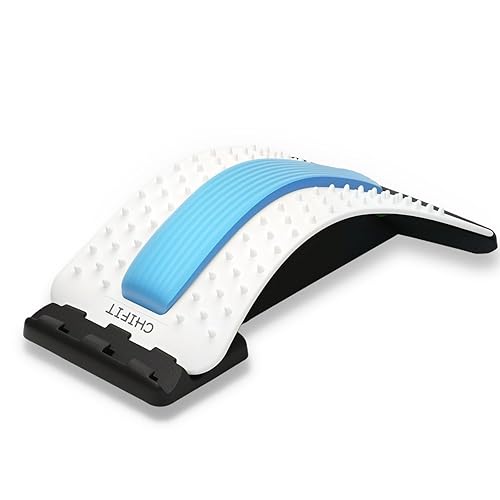 Best for targeted back stretchingMulti-Level Back Stretching DeviceView on Amazon
Our Top Picks
Quick Comparison
| Product | Best for | Key feature |
|---|---|---|
| Sunny Health & Fitness Ab Roller Exercise Wheel | Core training with a more forgiving setup | Comfortable handle grips |
| Mini Inversion Table with Rollers, Back Extension Machine | Home spinal decompression | Rollers and a 297 lb weight capacity |
| Multi-Level Back Stretching Device | Targeted back stretching | Adjustable support levels |
Sunny Health & Fitness Ab Roller Exercise Wheel for Core Training
Comfortable Handle Grips, Abdominal Exercises, Core Training, Targets Abs Hip Flexors Shoulders Obliques & Back Muscles Sunny Health & Fitness Ab Roller Exercise Wheel for Core Training
Best for: Core training with a more forgiving setup
This is the most direct replacement for a standard ab wheel. It suits people who want to keep training their abs but who find that a bare, narrow wheel puts too much strain on the lower back and hip flexors during rollouts.
Key specs
- Single-wheel abdominal roller with a handle grip design
- Listed to target the abs, hip flexors, shoulders, obliques and back muscles
- Comfortable handle grips for a more stable hold
Pros
- Handle grips help keep wrists and hands comfortable during reps
- Simple design with no assembly required for most users
- Works well as a first step toward more advanced rollouts
Cons
- A single wheel still demands good bracing, so beginners may need to limit range of motion
- Does not decompress the spine on its own
Bottom line: A good choice if you want to keep ab rollouts in your routine and need a setup that feels more controlled. Start with short ranges and stop if your lower back arches.
Mini Inversion Table with Rollers, Back Extension Machine
Back Pain Relief, Easy to Assemble & 297LBS Weight Capacity, Spinal Decompression Table for Home Gym (Red) Mini Inversion Table with Rollers, Back Extension Machine
Best for: Home spinal decompression
This suits people whose lower back discomfort is the main problem and who want a way to unload the spine between or after core sessions. It is a different tool from an ab roller, so it works best as a complement rather than a direct swap.
Key specs
- Listed weight capacity of 297 lbs
- Built-in rollers and a back extension design for home use
- Marketed as easy to assemble
Pros
- Designed around spinal decompression, which is a different goal from ab training
- Compact enough for many home gyms
- Gives a passive way to relieve lower back tension
Cons
- Not an ab exercise tool, so it will not replace a core routine
- Inversion work is not appropriate for everyone, including people with certain heart, eye or blood pressure conditions
Bottom line: Best for someone who wants to reduce back strain at home. Check with a doctor before using any inversion or decompression equipment, especially if you have existing spinal conditions.
Multi-Level Back Stretching Device
Multi-Level Back Stretching Device – Immediate Relief for Herniated Disc, Sciatica, Scoliosis,Lower and Upper Back Stretcher Support and Pain Relief
Best for: Targeted back stretching
This is aimed at people who feel tightness or pressure across the lower and upper back and want a fixed, supported position to ease into a stretch. It fits into a warm-up or cool-down rather than a high-intensity core session.
Key specs
- Multi-level design for different stretch positions
- Marketed for lower and upper back support and stretching
- Listing references use for herniated disc, sciatica and scoliosis discomfort (not medical treatment)
Pros
- Lets you adjust the intensity of a stretch gradually
- Low-impact, so it fits easily into a daily routine
- Targets areas that an ab roller does not address
Cons
- Stretching devices can cause discomfort if pushed too far, and owners often report starting with the lowest level
- Marketing claims about medical conditions are not a substitute for professional care
Bottom line: A reasonable pick if your back feels stiff and you want a supported stretch. If pain is sharp, radiates down a leg or is persistent, see a medical professional before using it.
Buying Guide
Check the wheel width and handle design
A narrow, single wheel asks the lower back to stabilize more than many people expect. Wider wheels or grips that keep your hands in a stable position can reduce the tendency to sag through the midsection. Choose a design where your wrists sit in a neutral line.
Good picks for this: Sunny Health & Fitness Ab Roller Exercise Wheel for Core Training
Look for spinal decompression features
If your goal is to relieve compression rather than build the abs, look for equipment designed around traction or inversion. Check the listed weight capacity and whether the frame is adjustable so you can control how much load goes through the spine.
Good picks for this: Mini Inversion Table with Rollers, Back Extension Machine
Match the tool to the problem
An ab roller trains the abs through a rolling motion. A stretching device or decompression table addresses tension and mobility. Knowing which problem you are solving prevents buying equipment that cannot do the job you need.
Good picks for this: Multi-Level Back Stretching Device, Mini Inversion Table with Rollers, Back Extension Machine
Check adjustability
Adjustable levels, angles or handle positions let you start gently and progress. Fixed-position tools can be too intense for beginners or for people returning from a back flare-up.
Good picks for this: Multi-Level Back Stretching Device
Consider weight capacity and stability
Weight capacity is listed for a reason. Stay well within it, and make sure the equipment sits on a flat, non-slip surface. A tool that shifts during use can strain the back quickly.
Good picks for this: Mini Inversion Table with Rollers, Back Extension Machine
Think about your training space
Inversion and decompression equipment needs more room than a single ab roller. Measure your floor space and ceiling clearance before ordering, especially for larger frames.
Good picks for this: Sunny Health & Fitness Ab Roller Exercise Wheel for Core Training, Multi-Level Back Stretching Device
Plan for care and durability
Inspect wheels, bearings, straps and joints regularly. Owners often report that worn parts are the first sign of trouble, so replace components that feel loose or make unusual noise.
Good picks for this: Sunny Health & Fitness Ab Roller Exercise Wheel for Core Training, Mini Inversion Table with Rollers, Back Extension Machine
FAQ
Why does my ab roller hurt my lower back?
The most common reasons are rolling out too far before your core can hold a neutral spine, letting the lower back arch, and using too much range too soon. Hip flexor tightness can also pull the pelvis into a position that loads the lumbar spine. For a full breakdown, see Why Does My Abdominal Wheel Ab Roller Hurt My Back? 6 Causes and Fixes.
Can an ab roller make back pain worse?
It can, particularly if you have an existing back condition or use poor form. Stop if you feel sharp pain, numbness or pain that travels down a leg, and talk to a healthcare professional before continuing.
Is an ab roller better or worse for the back than a plank?
Many people find a plank easier to control because the load is more even and the range is fixed. Planks are not automatically safer for everyone, though. The comparison is covered in Is Ab Roller Good for Back? Ab Roller vs Plank (2026): Which Should You Choose?.
How far should I roll out to protect my lower back?
Start with a short range, such as a few inches, and only extend as far as you can keep your ribs down and your lower back flat. If you cannot maintain that position, your range is too far for now.
Do I need a stretching device if my back is sore?
Not necessarily. Gentle movement and mobility work often help, and exercises like those in Exercises for Lower Back Pain: 6 Gentle Moves to Start Today can be a useful starting point. A stretching device adds a supported position but does not replace good movement habits.
Is inversion equipment safe to use at home?
It can be, but it is not suitable for everyone. Inversion and decompression tools carry risks for people with certain cardiovascular, eye or spinal conditions. Speak with a doctor or physical therapist before using them.
How does the lower back work with the core during ab training?
The core muscles stabilize the spine during movement. When the abs are weak or fatigued, the lower back often takes over, which is why form matters so much. Learn more in The Lower Back and Core: How They Work Together.
Conclusion
If an ab roller hurts your lower back, the first step is adjusting your form and range. If you want to keep training your abs, the Sunny Health & Fitness Ab Roller Exercise Wheel is the most direct option, provided you start with short ranges. If decompression is your main goal, the Mini Inversion Table with Rollers suits home use, but check with a doctor first. For targeted stretching of the back, the Multi-Level Back Stretching Device offers adjustable support. Choose based on whether your need is core training, spinal relief or stretching, and stop any movement that causes sharp or spreading pain.
Sources
- Research summaries on low back pain causes, management and when to seek medical care (nih.gov)
- Guidance on physical activity and safe exercise for adults (cdc.gov)
- Position statements and exercise guidelines from a professional exercise medicine association (acsm.org)
About Owen Palmer
Owen Palmer is part of our editorial team and reviews and edits our core & abs guides, checking product details against manufacturer specifications and owner feedback.