By Audrey Hayes
Updated November 2026
The ab roller effect on body is mostly felt in your core, but it reaches further than the abs alone. This guide explains which muscles an ab roller works, what changes you can realistically expect, and how to keep the movement safe enough to be worth doing regularly.
What an Ab Roller Trains
An ab roller is a wheel with a handle on each side. You kneel, grip the handles, roll forward and pull back under control. The rectus abdominis, the front abdominal wall, does most of the work as you flex your trunk. The obliques and transverse abdominis help stabilize your torso so it doesn’t sag or twist. Your lats, shoulders and hip flexors also engage to hold the position.
Shopping for one? See our guide: Body Sculpture Ab Roller (2026): Which Should You Choose?.
For a deeper breakdown of muscle targeting, see Which Ab Roller Muscle Group Does It Work? Muscles Targeted and Form Tips.
How the Movement Affects Your Core and Posture
The main benefit is anti-extension strength: the ability to resist your lower back arching when your arms move away from your body. That strength carries over to standing posture and to lifts like squats and deadlifts, where a stable trunk protects the spine. Many people also notice their torso feels more braced during daily tasks.
The lower back and hips are affected too. Rolling out loads the hip flexors and lats, and if your pelvis tilts forward, the lower back takes extra strain. This is why form matters more than range.
Step-by-Step Setup for Better Results
- Kneel on a mat with the wheel in front of your knees and your hands on the handles, shoulder-width apart.
- Brace your abs and squeeze your glutes so your ribs stay down and your hips stay level.
- Roll forward slowly, keeping your arms straight or nearly straight, until you feel a strong stretch in your abs without your lower back sagging.
- Pull back by contracting your abs, not by pushing with your hips. Start with 5 to 8 controlled reps, rest 60 seconds, and repeat for 2 to 3 sets.
If you’re new to the movement, a shorter range is fine. Progress only when you can roll out and return without your hips dropping.
Realistic Expectations for Your Body
An ab roller builds core strength and endurance. It does not reduce body fat in your midsection by itself, and it cannot target fat loss to one area. Visible abs depend mostly on total body fat, which is controlled largely by diet and overall activity. Consistent training with an ab roller, combined with those habits, gives the best outcome. For more on this, read Will an Ab Roller Give Me Abs? What It Can and Can't Do.
Common Mistakes
- Letting the lower back sag or arch at the furthest point of the roll.
- Going too far too soon, which overloads the lower back.
- Using momentum or hip swings to return instead of abdominal control.
- Holding your breath; exhale as you pull back.
- Skipping rest days, which can leave the core and lower back fatigued.
If you have back pain, a history of hernia, or any health condition, check with a doctor or physical therapist before starting.
Recommended Gear
- Kneeling pad: A thick mat protects your knees and keeps you steady during the roll. View on Amazon
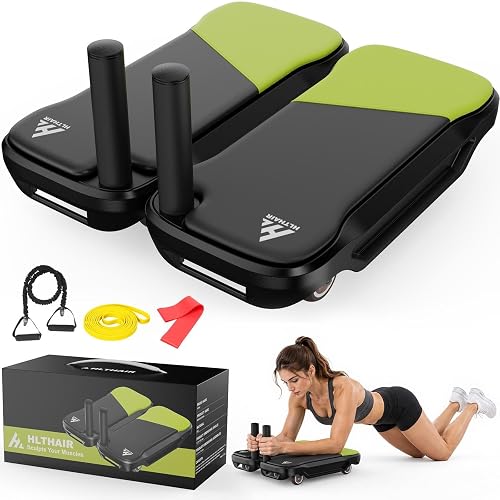
- Dual-wheel ab roller: Two wheels keep the wheel stable and make balance easier for beginners. View on Amazon
FAQ
Does an ab roller work your lower back?
It engages the lower back as a stabilizer, especially if you let your hips sag. Proper bracing keeps the load on your abs and reduces strain on your spine.
How often should I use an ab roller?
Three sessions per week is a common starting point, with at least one rest day between sessions. Increase reps or range only when your form stays clean.
Can an ab roller replace crunches?
It can be a strong alternative because it trains the abs through a longer range and adds stability demands. Many people use both, since each emphasizes different movement patterns.
Conclusion
The ab roller effect on body centers on core strength, trunk stability and posture rather than spot fat loss. Controlled reps with a neutral spine deliver the most benefit and the least strain. Build up gradually, pair the training with good nutrition, and stop if you feel sharp back pain.
Related reading
- Effects of Ab Roller: What It Does to Your Core, Back and Hips
- Workout With Ab Roller: A Step-by-Step Guide for Beginners
- Wonder Core Ab Roller: Is It Worth Buying? Features, Form and Fit
Ready to choose one?
About Audrey Hayes
Audrey Hayes is part of our editorial team and reviews and edits our core & abs guides, checking product details against manufacturer specifications and owner feedback.