By Audrey Hayes
Updated November 2026
Getting ab roller correct form right is the difference between working your abs and straining your lower back. A proper rollout keeps your core braced, your hips in line with your shoulders and your spine stable while your arms extend. This guide walks through the setup, the movement itself and the common errors to fix before you add more reps.
Set Up Your Starting Position
Start on your knees on a mat, with your hands gripping the handles at shoulder width. Place the wheel directly under your shoulders, not in front of them. Keep your feet relaxed behind you so your weight stays on your knees. Many people start with their hands too wide or too narrow, which makes it harder to control the wheel. Choose a grip where your wrists stay straight.
Shopping for one? See our guide: 6 Best Ab Wheel Rollers: Top Picks Compared for Home Core Training (2026).
Brace Your Core Before You Roll
Before you move, tighten your abs as if you expect a light punch to the stomach. Squeeze your glutes and tuck your pelvis slightly, so your lower back does not arch. Keep your neck in line with your spine by looking at the floor a foot or so in front of the wheel. This bracing is the foundation of ab roller correct form, and it should stay active for the entire movement.
Perform the Rollout and Return
Roll forward slowly, extending your arms while keeping your torso in one straight line from head to knees. Go only as far as you can hold that line, which is often a partial range for beginners. Pause briefly, then pull back using your abs rather than your hips. Your body should move as one unit, with no sagging in the middle.
Checklist for Each Rep
- Hands at shoulder width, wheel under your shoulders.
- Abs and glutes braced before the first inch of movement.
- Arms extend while your back stays flat.
- Pause at your furthest comfortable point.
- Return by curling your torso back toward your knees.
Choose a Safe Progression
Start with 5 to 8 controlled reps and build up as your form holds. Once you can roll out comfortably from the knees, you can try a standing version, which is far more demanding and should only be attempted after you have strong control. Most people do best with two or three short sessions a week rather than long daily sets. Stop when your form breaks, not when you hit a number.
Common Mistakes
- Letting the hips drop toward the floor, which puts strain on the lower back.
- Rolling out too far before the core can hold the position.
- Holding your breath instead of exhaling as you pull back.
- Shrugging the shoulders or letting the neck crane forward.
- Using momentum to bounce back instead of controlled abdominal effort.
For more on what the movement targets, see Which Ab Roller Muscle Group Does It Work? Muscles Targeted and Form Tips. If you feel pain in your back or shoulders, Ab Roller Shoulder Pain: Causes, Fixes and Safer Form (2026) covers likely causes and fixes.
Recommended Gear
- Knee pad or padded mat: cushions your knees during kneeling rollouts, which helps you stay in position longer. View on Amazon
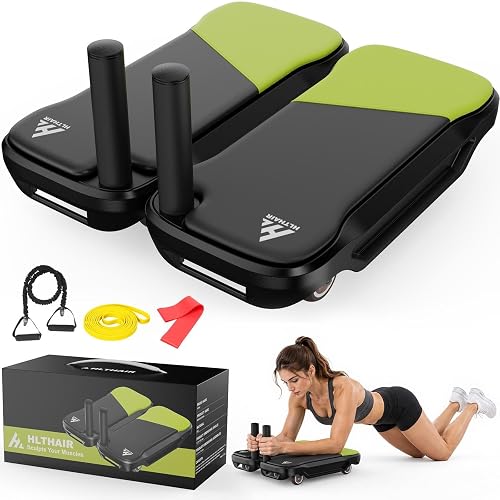
- Dual-wheel ab roller: two wheels add stability for beginners learning to keep the torso straight. View on Amazon
FAQ
How far should I roll out as a beginner?
Roll out only as far as you can keep your back flat and your hips level. For most beginners this is a short distance, and the range grows as your core strength improves.
Should my back feel sore after using an ab roller?
Your abs and shoulders should feel worked, but your lower back should not. If you feel sharp or persistent back pain, stop and consult a physical therapist or doctor before continuing.
How often should I do ab roller exercises?
Two to three sessions per week is a sensible starting point, with at least one rest day between sessions. Adjust based on how your muscles recover.
Conclusion
Ab roller correct form comes down to a braced core, a neutral spine and a controlled range of motion. Master the kneeling version before progressing, and keep your reps smooth rather than fast. Consistent, careful practice will build more strength than rushing ahead.
Related reading
Ready to choose one?
About Audrey Hayes
Audrey Hayes is part of our editorial team and reviews and edits our core & abs guides, checking product details against manufacturer specifications and owner feedback.