By Lauren Holland
Updated November 2026
Exercises for core strength train the muscles that stabilize your spine, hips and rib cage, not just the ones you see in the mirror. This guide covers seven foundational moves, the form cues that make them work, and the mistakes that quietly cancel out the benefit. Work through them in order and you will build the stability needed for lifting, running and everyday movement.
What Your Core Actually Does
Your core includes the deep transverse abdominis, the obliques, the rectus abdominis, the lower back muscles and the diaphragm. Its main job is to resist unwanted movement, such as your torso collapsing or rotating when you carry a heavy bag or swing a bat. That is why the best exercises for core strength focus on bracing, anti-extension and anti-rotation, not just repeated crunching.
Shopping for one? See our guide: 6 Best Plank Exercises for Core Strength Options Compared (2026).
Seven Core Strength Exercises to Start With
- Dead bug. Lie on your back with arms pointing to the ceiling and knees bent at 90 degrees. Press your lower back gently into the floor, then slowly extend the opposite arm and leg. Aim for 8 to 10 controlled reps per side.
- Side plank. Lie on one side, stack your feet, and prop yourself on your forearm with elbow under shoulder. Lift your hips until your body forms a straight line. Hold 20 to 30 seconds per side.
- Glute bridge. Lie face up with knees bent and feet flat. Drive through your heels to lift your hips until your knees, hips and shoulders line up. Squeeze at the top for two seconds and lower slowly. Do 10 to 12 reps.
- Bird dog. Start on all fours with hands under shoulders and knees under hips. Extend one arm forward and the opposite leg back, keeping your hips level. Hold for two seconds and switch. Do 8 to 10 reps per side.
- Front plank. Support yourself on forearms and toes with a straight line from head to heels. Hold 20 to 45 seconds.
- Pallof press. Stand sideways to a cable or resistance band anchored at chest height. Hold the handle at your chest, press straight out, pause, and return. Do 10 reps per side.
- Hollow body hold. Lie flat, lift your arms and legs a few inches off the floor, and press your lower back down. Hold 15 to 30 seconds.
How to Progress Your Core Training
Start with exercises you can perform for the full number of reps with clean form. Once a move feels easy, increase the difficulty in small steps rather than jumping to advanced versions.
- Lengthen the hold time before adding reps.
- Slow the lowering phase to three or four seconds.
- Move your limbs farther away from your center, as in a longer lever dead bug.
- Add light resistance, such as a band or a single dumbbell held at the chest.
For a fuller framework on when to advance a move, see When and How to Progress a Core Exercise. If you prefer to work through standing variations, Standing Exercises for Abs: 6 Moves for a Stronger Core offers good options that also train balance.
Building a Simple Weekly Routine
Train your core two to four times per week, with at least one rest day between sessions. Choose three to four exercises from the list above, covering anti-extension (planks), anti-rotation (Pallof press) and anti-lateral flexion (side planks). Keep most sets in the 8 to 12 rep or 20 to 45 second range, and stop a set when your form starts to break down.
For more ideas, What Are the Best Exercises for Improving Core Strength? 8 Moves That Work and Exercises to Strengthen Core: 8 Moves for Stability and Strength both expand on this framework with additional movements.
Common Mistakes to Avoid
- Holding your breath. Breathe steadily through each rep and brace your midsection gently, as if preparing for a light tap to the stomach.
- Arching the lower back. In dead bugs and bridges, keep your ribs down and your lower back neutral.
- Rushing reps. Momentum takes tension away from the muscles. Count two seconds up and two seconds down.
- Sagging hips in planks. Squeeze your glutes and imagine pulling your elbows toward your toes.
- Neglecting the sides and back. Balance front and side work with bridges or bird dogs so your core develops evenly.
Recommended Gear
A mat adds cushioning for floor work and keeps your elbows and knees comfortable during planks and dead bugs. View on Amazon
A resistance band lets you add load to bird dogs, Pallof presses and rotational holds without a gym. View on Amazon
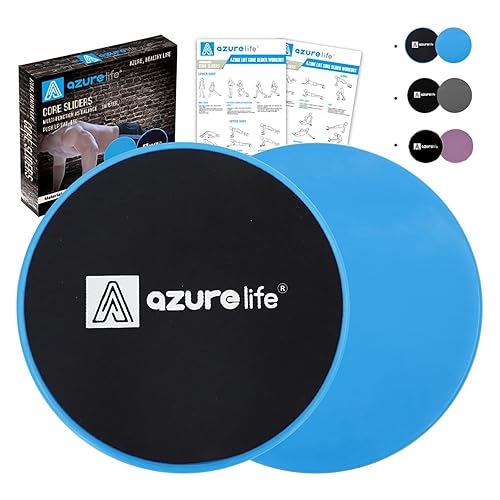
A small ab wheel or sliding disc adds controlled difficulty to rollouts once basic planks feel comfortable. View on Amazon
FAQ
How often should I do exercises for core strength?
Most people benefit from two to four sessions per week, with rest days in between. Consistency matters more than volume, so a short, focused routine done regularly beats long sessions done rarely.
Will these exercises give me visible abs?
Core exercises build muscle and improve stability, but visible abs depend mainly on overall body fat levels, which are shaped by nutrition and total activity. Strong core muscles still improve posture and function regardless of appearance.
If I have back pain, is it safe to start?
Many gentle moves, such as dead bugs and bridges, are commonly used in rehabilitation settings, but you should consult a physical therapist or doctor before starting if you have an existing injury or ongoing pain.
Conclusion
Effective exercises for core strength train bracing, anti-rotation and stability, not just spinal flexion. Start with dead bugs, side planks, bridges and bird dogs, track your form, and progress gradually. Within a few weeks of consistent practice, most people notice better control and less fatigue during daily movement.
Ready to choose one?
About Lauren Holland
Lauren Holland is part of our editorial team and reviews and edits our core & abs guides, checking product details against manufacturer specifications and owner feedback.